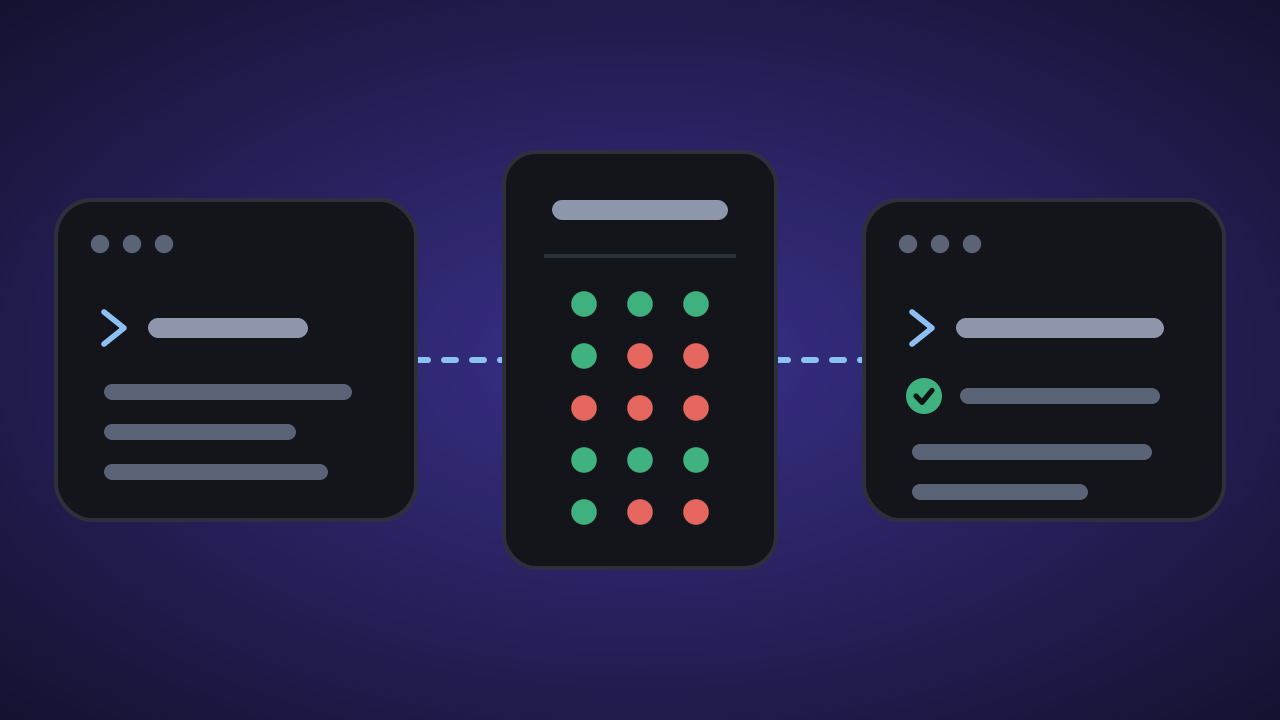
CLAUDE.md goes stale when it holds things that change, like status, what's next, file lists, numbers and dates. Keep it to things that stay true for months, such as commands, conventions, constraints and where things live. Put the plan where your agent reads and writes it as it works.
I've kept one CLAUDE.md for Frostbyte since 25 December 2025, and it has 43 commits. It started at 149 lines, grew to 288 lines and about 3,400 words by October 2026, and is 89 lines today. Its history shows which kinds of line last.
What goes stale
Lines that describe the current state of things. The file doesn't change when the code does, and your agent can't tell an old line from a new one, so it follows both.
These are real lines from our history. The first was written on 25 December 2025:
- `projects/general.ts` - Main project routes (~60KB, handles most project CRUD)
The next day the routes were split into nine files, and the line had to become a list of nine. The second was right when it was written on 24 January:
- Update `public/sitemap.xml` when adding or renaming public pages.
+ The sitemap is generated at runtime from the `staticUrls[]` array in `src/routes/main-routes.ts`
The sitemap moved into code on 21 April. The old line stayed wrong until an audit caught it on 1 May.
Numbers went the same way. On 29 September the new end-to-end suite was listed at "20s". Six hours later, after its modal specs started running in two more browsers, the same line said "1 min".
The worst one was a pointer to a plan. Our AGENTS.md, written on 25 January, sent agents to REFACTORING_ROADMAP.md for "known tech debt and planned improvements". That phased refactor plan had been deleted on 26 December, a month before the pointer was written. The pointer stayed until 2 May.
The biggest source by volume was the file list. It grew with every new module, until a July edit admitted that "new modules land often enough that a full inventory goes stale fast". The list came out in October, along with most of the file.
Our CLAUDE.md never held task status. Since May it has sent plans to a folder outside the repo, so what went stale for us was facts about the code. Status changes more often than code structure does, so a line saying what's done or what's next goes stale even faster.
What stays true
Five of the eight "common pitfalls" in the first version are still there eleven months later. The wording has been tightened, and the rules haven't changed:
1. **Modal state**: use `setModalUrl()` and `restoreUrlAfterModalClose()` from `project-router.ts`.

2. **Socket.IO rooms**: clients emit `project:join` on page load; backend uses `emitToProject()`, never a broadcast.

4. **ID types**: Users use ObjectId; Projects, Tasks, Areas, Releases and Activities use `shortid` strings. Don't mix them; follow the entity's pattern in new models.
They last because they're rules about how the code is meant to work. They don't describe what's in it today. npm run devStart has been in the file since day one for the same reason. Rules added after a mistake last well too. One added in May warns that a fix to the server-rendered template gets overwritten by the realtime code unless both are changed, which the agent can't see from one file.
Will this still be true in a month?
Ask that of every line. If the answer is no, it belongs somewhere else.
| Keep in CLAUDE.md | Keep out |
|---|---|
| Build, test and dev commands | Task status, what's done and what's next |
| Conventions the code doesn't show, like ID types | A list of every file or route |
| Constraints and gotchas | Sizes, counts and timings |
| Where things live: which doc, which folder | Dates, and anything that says "currently" |
| Rules that came from a repeated mistake | Links to working plans |
Anthropic's memory docs agree, as of 3 November 2026. They suggest under 200 lines per file, holding only facts Claude needs in every session. The /doctor checkup proposes cutting directory layouts, dependency lists and architecture overviews, which is most of what we cut in October. /doctor prompt-audit (Claude Code v2.1.283 or later) looks for references to files and commands that no longer exist, which would have caught our pointer to the deleted roadmap.
What auto memory covers now
Claude Code also keeps notes of its own. Auto memory is on by default in local sessions. Claude saves notes to ~/.claude/projects/<project>/memory/, and the first 200 lines or 25KB of its MEMORY.md index load into every session. One of its four kinds of note is project, for ongoing work, deadlines and decisions that can't be worked out from the code.
So auto memory can carry some status from one session to the next, with limits. It stays on one machine, so a cloud session, your laptop and a teammate don't see it. Claude decides what's worth saving, so it isn't a complete plan. And its notes go stale like any others. Claude Code stamps each one with the time it was written, so you and Claude can see how old it is.
Where the plan goes instead
The plan needs a home your agent reads before it starts and updates as it works:
- A tracker your agent can reach over MCP, such as Frostbyte or Linear. Use this when someone else needs to see the plan, or it spans more than one repo.
- Claude Code's built-in Tasks, though in our test a new session didn't read them.
- A plan file in the repo, like TODO.md or Backlog.md, with a rule in CLAUDE.md saying when to read and update it. That rule belongs in CLAUDE.md. The plan doesn't.
We tested seven of these setups to see which ones keep the plan between sessions. If a TODO.md has started to sprawl, here's when to move it. The same split works for Codex and AGENTS.md, and the issue tracker article has a snippet for it.
Where Frostbyte fits
Frostbyte holds the part that changes: What's Next, tasks with their decisions and agent context, and releases. Your CLAUDE.md keeps the rules, plus one line telling the agent to read the task first. Your agent connects on every plan, Free included. If the plan only has to serve you and one repo, a plan file with a rule in CLAUDE.md will do the job.